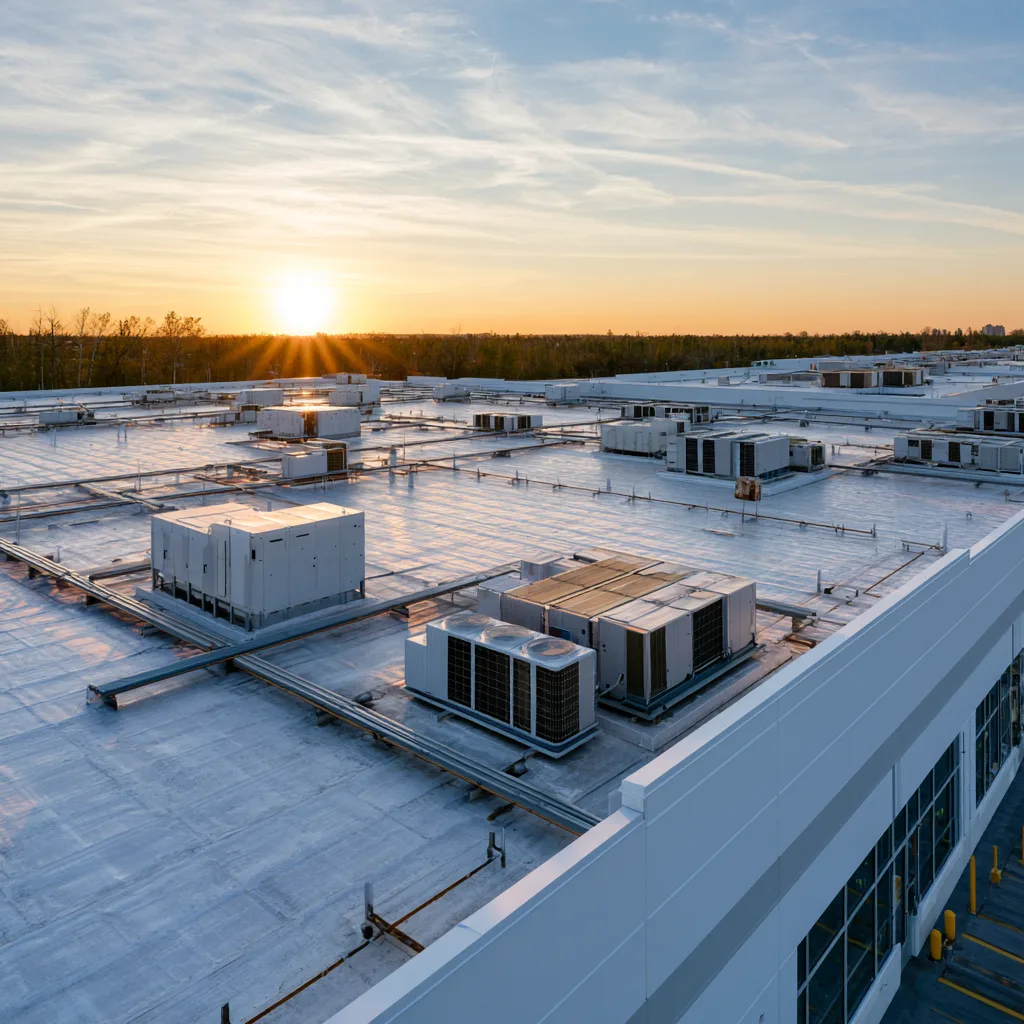
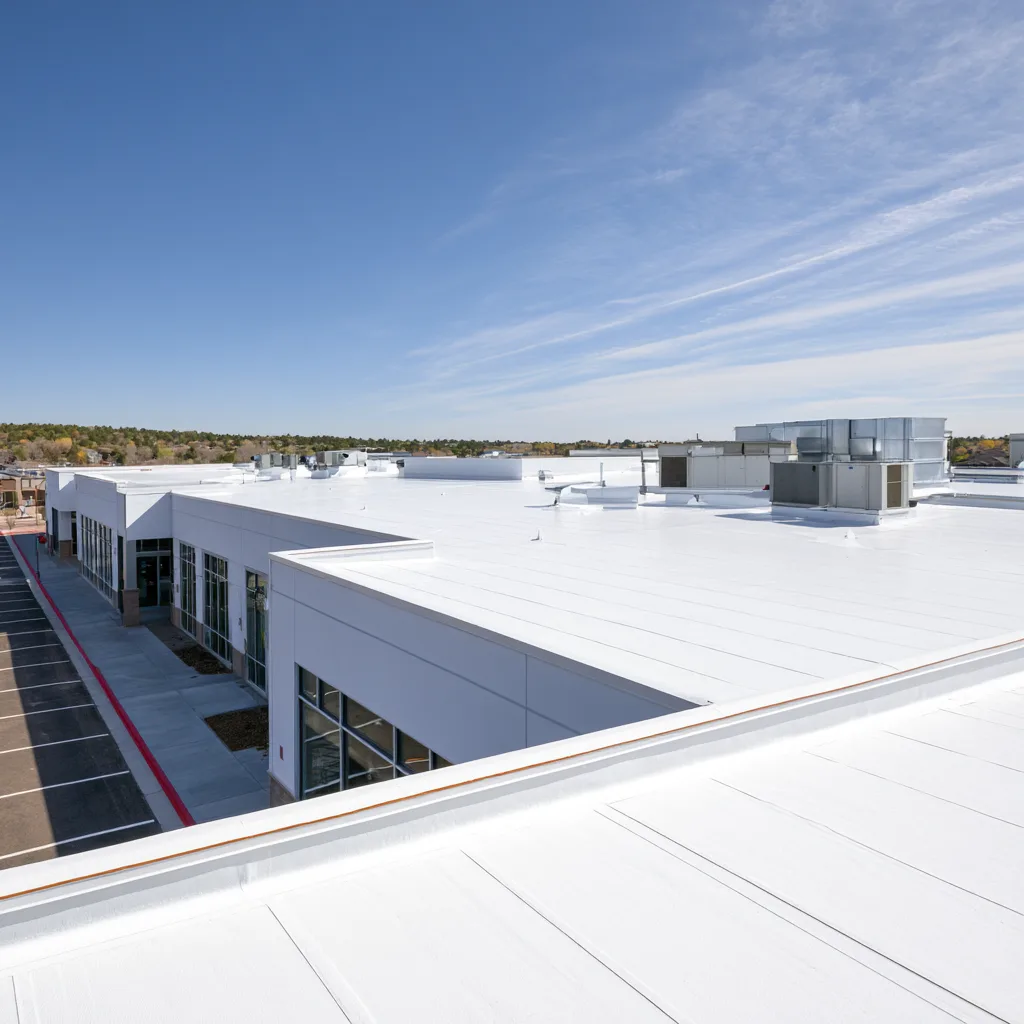
Commercial roof drainage explained
A low-slope roof needs a working route to drains, scuppers or gutters. Surface repairs and drainage corrections answer different parts of the leak problem.
- Free roof inspections
- Repair and replacement options explained
- Residential and commercial roofing
Call about your roof (816) 406-0987
A clear drainage path belongs beside a sound membrane
A low-slope roof needs a working route to drains, scuppers or gutters. Surface repairs and drainage corrections answer different parts of the leak problem.
Use the explanations and limits below to connect this question with the work on the actual roof. Tell us the property location and the concern when you want a roofer to take a closer look.
- Start with the roof
- The covering, details and supporting layers determine the construction work.
- A useful next step
- Call (816) 406-0987 or request a free inspection for the actual property.
What each drainage detail does
Interior drain
A drain connects the roof surface to a pipe through a flashed connection. Debris can obstruct the opening, while a failed connection can leak even when water flows freely.
Scupper and edge outlet
A scupper passes through a parapet or edge. Its flashing needs to connect with the roof membrane, and the path beyond the opening must carry water away.
Slope and low areas
The roof and insulation arrangement direct water toward outlets. A low spot holding water is not corrected simply by cleaning a drain or applying a new coating.
Separate a blocked route from a failed roof detail
Standing water can result from debris, outlet conditions, settlement or the roof’s slope. A leak can also occur at an open seam or curb within that wet area. The inspection needs to identify both the water route and the failed detail.
When insulation is wet, a surface coating will not restore it. Repair or replacement planning considers the moisture extent, deck condition and the drainage arrangement together.
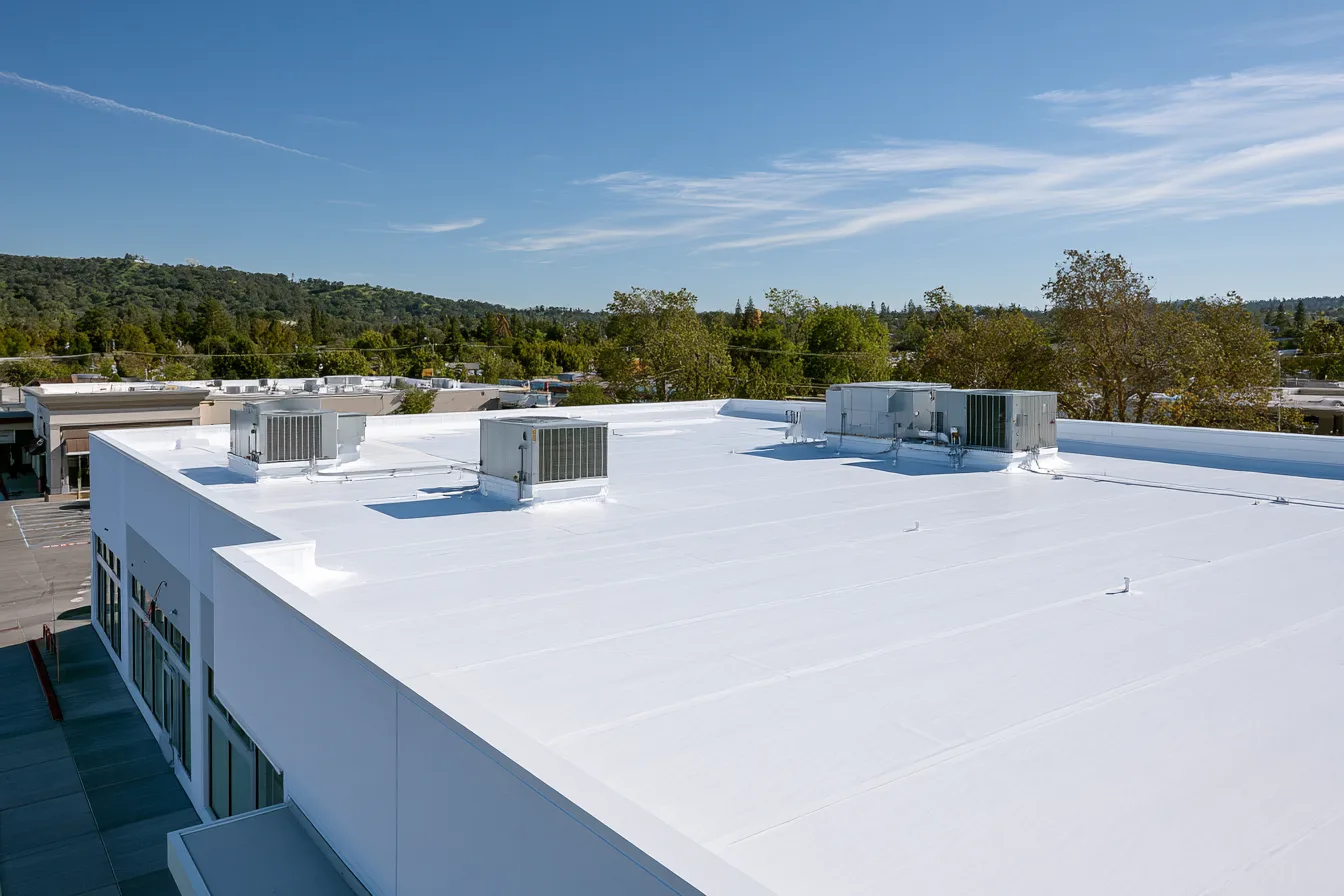
Include drainage in the project scope
For repairs
Restore the failed connection and assess the route that concentrates water there. A patch alone should not be described as a drainage correction.
For replacement
Plan slope, insulation, drains and flashings as an assembly. Existing penetrations and equipment can affect the routes water takes.
For maintenance
Keep outlets and routes visible and address debris or damaged details appropriately. Building access and rooftop service work should fit that upkeep.
Talk about commercial roof drainage
Call (816) 406-0987 or request a free roof inspection. Tell us the property location and what you have noticed.